Benveniste's Paper, and What Nature Did Next
Jacques Benveniste's 1988 Nature paper on high-dilution effects on basophil degranulation — the paper itself, the editorial note Nature attached, and the supervised replication reported in the same journal that failed to confirm the findings.
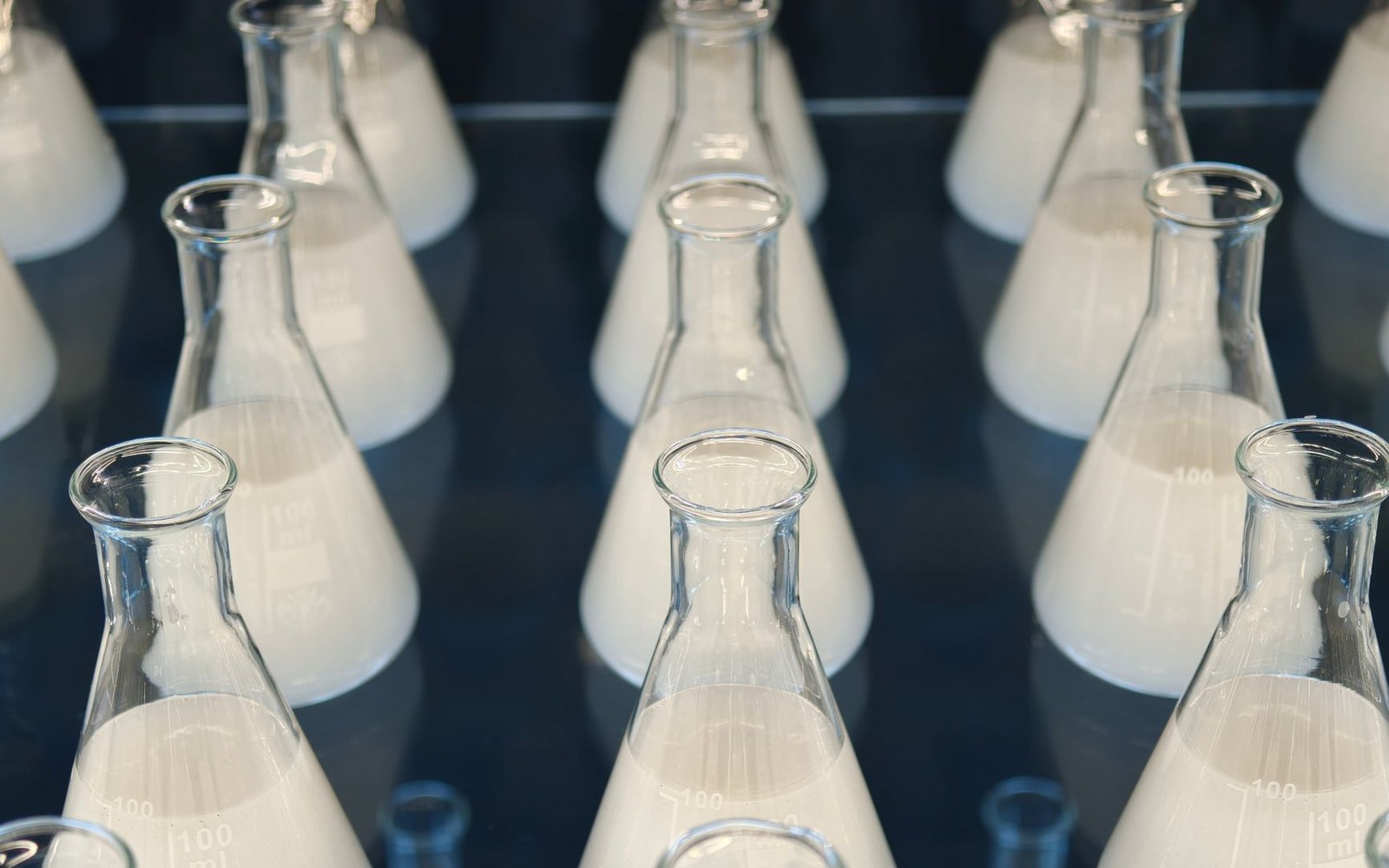
Each flask holds one hundredth of what the flask before it held.Photo: Tombson Klarel / Pexels
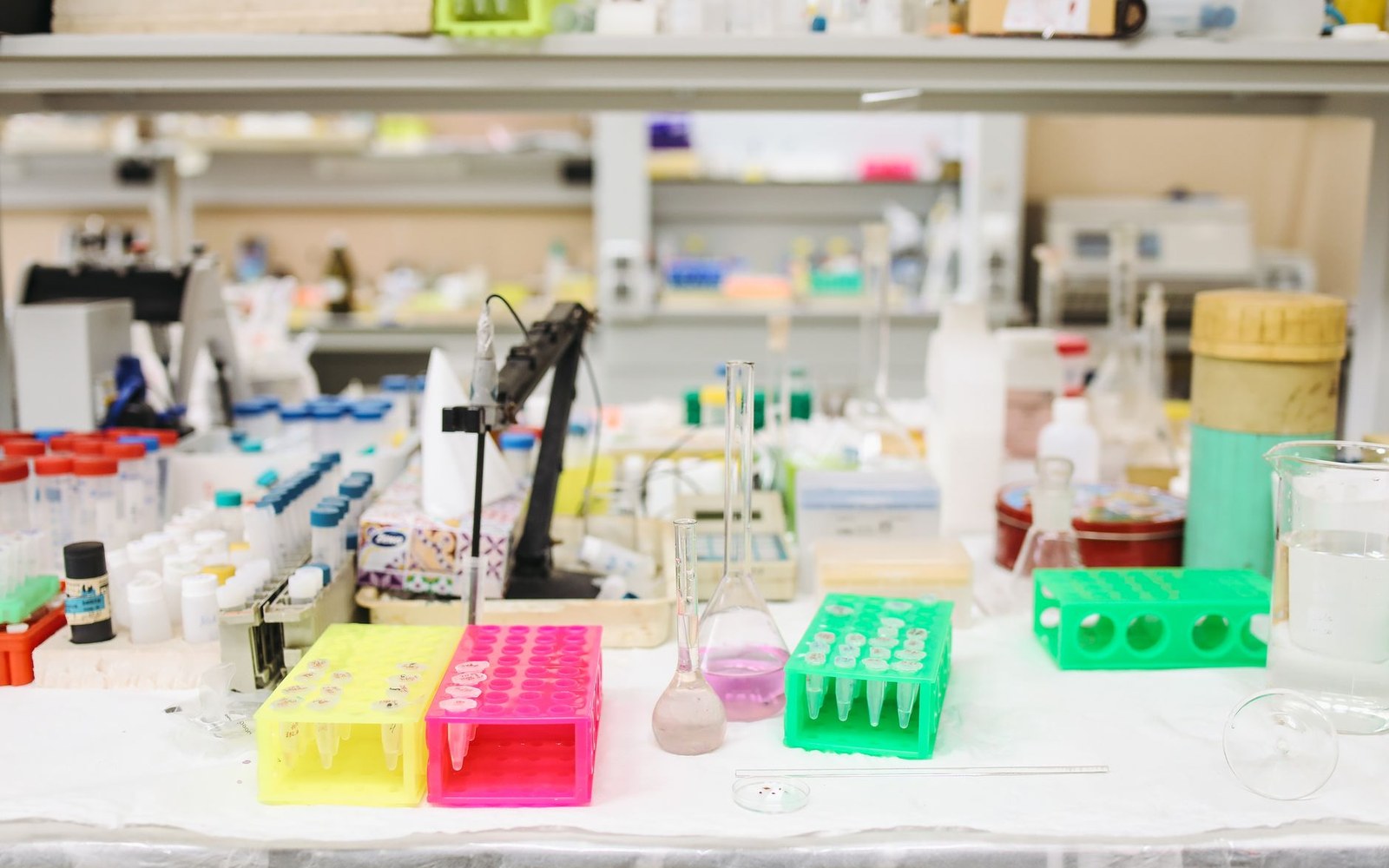
Nature printed the paper with a reservation attached and then sent a team to the bench.Photo: Polina Tankilevitch / Pexels
A 1988 experiment claimed to show biological activity at extreme dilutions; the journal that published it attached an immediate caveat, then sent an oversight team to watch the experiment again.
The Paper and Its Claim
In June 1988, Nature published a paper by Jacques Benveniste and twelve co-authors from laboratories in France, Canada, Israel and Italy. The paper reported that human basophils — immune cells that normally release granules when exposed to an antibody — appeared to degranulate even when the antibody solution had been diluted so many times that no antibody molecules could plausibly remain. The dilutions used extended well past the threshold set by Avogadro's number, the constant 6.022 × 10²³ that determines when a solute becomes statistically absent from a solution. Benveniste's team interpreted the result as evidence that water retained a functional "memory" of the substance it had once contained — a formulation that mapped directly onto the theoretical framework of homeopathic potentisation.

The conclusions section, where a review states its own finding rather than a summary of it.Photo: MART PRODUCTION / Pexels
The finding, had it stood, would have required a revision of basic chemistry. Nature's editor, John Maddox, chose to publish it anyway, reasoning that the claim was extraordinary enough to warrant open scrutiny. He did not, however, publish it without qualification.
The Editorial Note
Attached to the paper on its first appearance was an editorial note, unprecedented in the journal's modern practice, stating that the editors had been unable to find adequate scientific explanation for the results but considered the claim sufficiently important to put before readers. The note flagged specific concerns about controls and blinding, and announced that Nature was reserving the right to investigate further. Maddox described the paper's hypothesis as one that "strikes most scientists as incompatible with the laws of physics and chemistry." This framing — publish and immediately interrogate — separated the episode from standard peer review. The journal was not endorsing the result; it was inviting refutation under its own roof.
- June 1988Benveniste et al. paper and editorial note published in Nature
- Later 1988Supervised replication report published in Nature; blinded experiment fails to confirm findings
- 2004Benveniste dies, continuing to dispute the 1988 replication result
The Supervised Replication
Later in 1988, Nature published a follow-up report ↗ describing a supervised attempt to replicate Benveniste's basophil degranulation findings. The oversight team included Maddox himself, the fraud investigator Walter Stewart of the US National Institutes of Health, and the skeptic James Randi. The team travelled to Benveniste's laboratory at INSERM — the French national biomedical research institute — in Clamart, outside Paris, and observed the experiment being conducted under blinded conditions: the identity of the coded samples was concealed from the experimenters until after the results were recorded.
Under those blinded conditions, the positive results did not replicate. The degranulation effect was absent or inconsistent in a way that the oversight team attributed to unblinded handling in the original trials. The Nature report concluded that the original positive results were artefacts of non-blind procedure — that experimenters, knowing which samples were which, had, perhaps unconsciously, influenced the outcome. Benveniste disputed this conclusion. He maintained that the blinding conditions imposed by the visiting team were themselves flawed, that the time pressure of the visit was unreasonable and that the results remained real. His objections were published alongside the replication report.
What the Episode Settled and What It Did Not
The supervised replication did not resolve the debate to Benveniste's satisfaction, and he continued working on high-dilution biology until his death in 2004, eventually pursuing claims about the digital transmission of molecular signals that attracted still wider scepticism. For the institutional record, however, the 1988 Nature sequence — paper, editorial caveat, failed blind replication — became the primary documentary reference for what happens when a high-dilution claim enters mainstream peer review.
The episode is cited in several subsequent reviews of homeopathic evidence, including the Australian National Health and Medical Research Council's 2015 systematic review, which addressed the broader question of whether clinical evidence supported homeopathic preparations. The Benveniste case remained the most scrutinised laboratory claim in the field's history: a paper that a major journal published with an attached disclaimer, then tested with a visiting oversight team, under blinded conditions, in the author's own laboratory.