Linde in The Lancet, Eight Years Earlier
Klaus Linde et al.'s 1997 Lancet meta-analysis, its conclusions, and the 1999 reanalysis by the same lead author that revised them — both attributed, both dated, the revision presented without editorial comment.
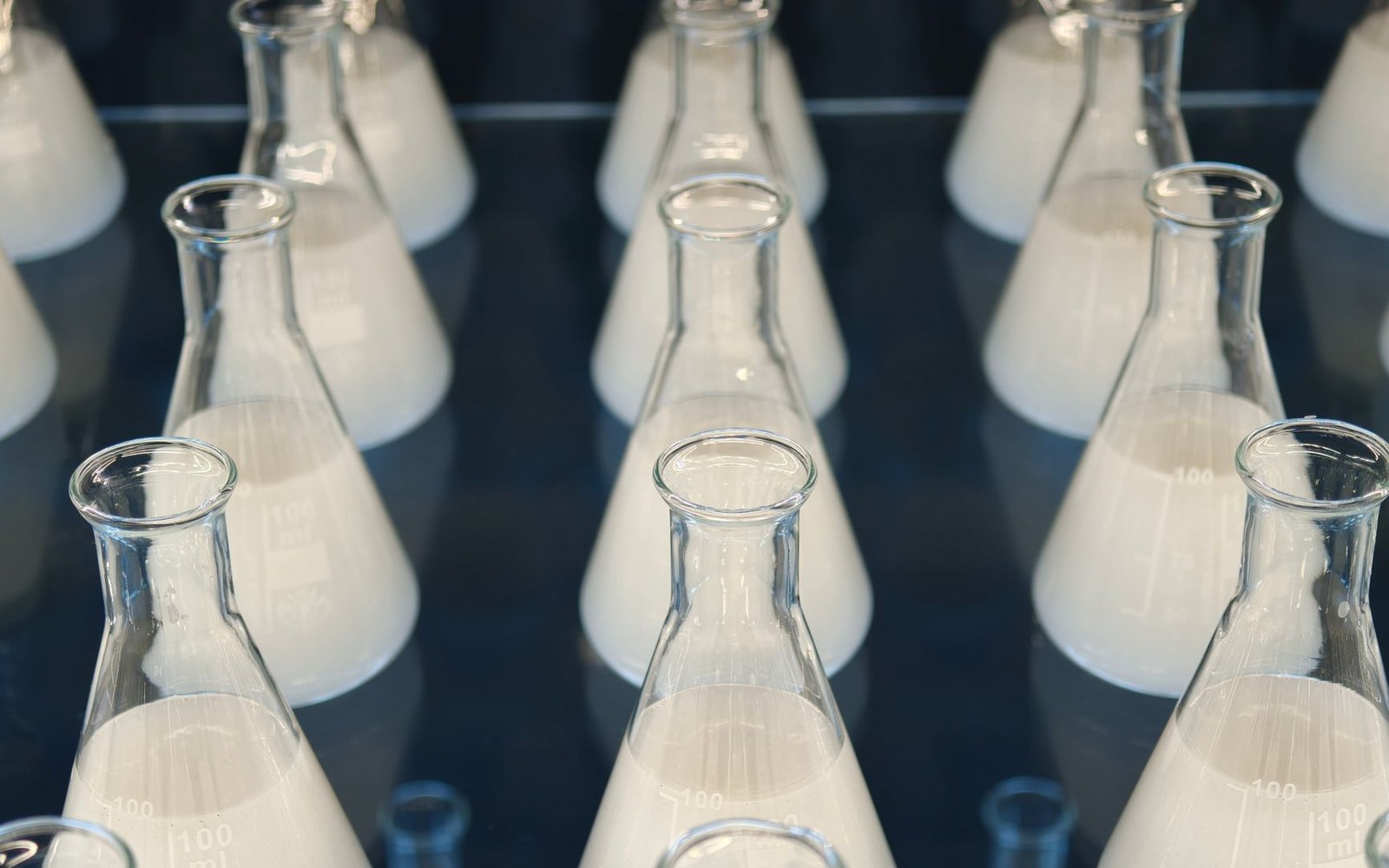
Each flask holds one hundredth of what the flask before it held.Photo: Tombson Klarel / Pexels

The same lead author published a reanalysis two years later that revised the finding.Photo: Josh Sorenson / Pexels
A result published, then revised by its own author
In 1997, Klaus Linde and colleagues published a meta-analysis in The Lancet examining whether the clinical effects of homeopathy could be distinguished from placebo. The paper pooled data from 89 placebo-controlled trials and concluded that the odds ratio for a beneficial outcome with homeopathy was 2.45 (95% confidence interval 2.05–2.93), a figure the authors described as incompatible with the hypothesis that homeopathy's effects were entirely due to placebo. The paper is widely cited as the most favourable large-scale statistical treatment the field had received from mainstream clinical literature.
The same lead author revisited the analysis two years later. In a 1999 paper — also attributed to Linde and colleagues — the team applied more stringent quality criteria to the same body of trials and found that as methodological quality improved, the estimated effect size shrank toward the null. Trials rated highly for internal validity yielded odds ratios substantially lower than those reported in 1997. The authors concluded in 1999 that the association weakened as study quality rose, but the findings were not fully explained by bias; the authors said the evidence of bias weakened rather than eliminated the earlier result when the analysis was restricted to the more rigorous subset.

The conclusions section, where a review states its own finding rather than a summary of it.Photo: MART PRODUCTION / Pexels
The pairing of the two papers represents an unusual case of self-correction within a single research group. The 1997 figure of 2.45 had already entered citation networks by the time the 1999 revision appeared, and continued to circulate independently of it. When Aijing Shang and colleagues published their own meta-analysis in The Lancet in 2005, they referenced both Linde papers and used the intervening literature to construct a differently structured comparison — 110 homeopathy trials matched against 110 conventional-medicine trials — arriving at conclusions broadly consistent with Linde's 1999 position.
- 1997Linde et al. meta-analysis published in The Lancet; 89 trials pooled; odds ratio 2.45 reported
- 1999Linde et al. reanalysis published; higher-quality trial subset yields odds ratio closer to null
- 2005Shang et al. meta-analysis in The Lancet engages both Linde papers
- 2015NHMRC systematic review incorporates Linde corpus, weights trials by methodological quality
The Australian National Health and Medical Research Council's 2015 systematic review also engaged with the Linde corpus when accounting for trial quality as a variable in its own assessment. Both the 1997 and 1999 Linde papers appear in the primary literature examined by that review, and the NHMRC's methodology of weighting by study quality follows a logic the 1999 reanalysis had already applied.
The two Linde papers are not in direct contradiction. They ask slightly different questions of the same evidence — the 1997 paper asks whether an effect is detectable in the aggregate; the 1999 paper asks whether that aggregate signal survives quality filtering. The answers differ accordingly.