The Swiss PEK Report, and the Dispute Over Its Authorship
The 2006 Swiss Programm Evaluation Komplementärmedizin report — what it examined, what the Swiss government commission found, and the documented dispute over whether the final published version reflected what the review authors submitted.ished version reflected what the review authors submitted.
Each flask holds one hundredth of what the flask before it held.Photo: Tombson Klarel / Pexels
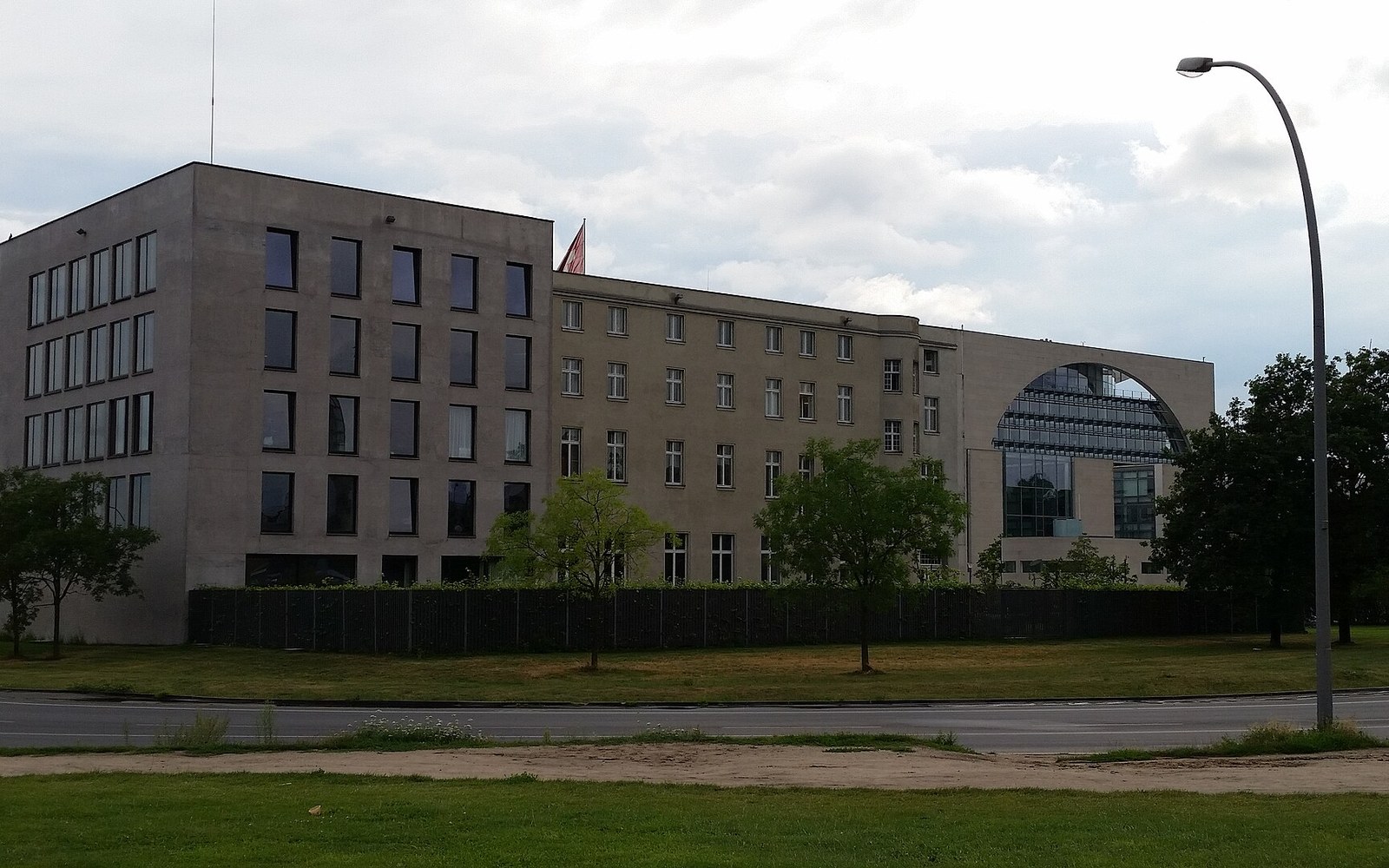
Bern. The dispute is over what the published version said against what was submitted.Photo: Swiss Embassy and Federal Chancellery - panoramio · Wikimedia Commons
A government-commissioned evaluation of complementary medicine became a contested document before its findings were formally settled.
What the Swiss Government Asked For
In the late 1990s the Swiss federal government was deciding whether to include five complementary therapies — among them homeopathy — within the country's mandatory basic health insurance scheme. To inform that decision, it commissioned the Programm Evaluation Komplementärmedizin, known by its German-language abbreviation PEK. The evaluation ran between 1998 and 2005 and was overseen by the Swiss Federal Office of Public Health. Its scope covered the clinical effectiveness, safety, and cost-effectiveness of homeopathy, anthroposophic medicine, herbal medicine, neural therapy, and traditional Chinese medicine.

The conclusions section, where a review states its own finding rather than a summary of it.Photo: MART PRODUCTION / Pexels
The PEK was structured as a series of individual reports, each addressing one therapy or one analytical question. The homeopathy component included a systematic review of clinical evidence and a health technology assessment. The researchers tasked with the homeopathy review worked through several hundred published studies, applying inclusion criteria based on trial quality. The existence of the review, its scope, and its timeline are documented in the Swiss government's official programme records.
What Happened Between Submission and Publication
The dispute centres on the relationship between the reports the researchers submitted to the government commission and the document that was subsequently published and publicly associated with the PEK. According to the researchers involved — whose objections were made in correspondence and in subsequent academic commentary — the published version contained alterations to their conclusions that they had not authorised. The claimed changes affected the strength and direction of the findings on clinical effectiveness.
- 19982005 — PEK evaluation conducted under Swiss Federal Office of Public Health oversight
- 2005Swiss government provisionally removes five complementary therapies from mandatory insurance
- 2006Book-length alternative report published in German as Homöopathie in der Krankenversorgung
- 2009Swiss Federal Council reverses exclusion decision; reinstatement from 2012
The government's provisional decision, announced in 2005, was to remove the five complementary therapies from the mandatory insurance scheme. That decision took effect in 2005 and remained in place for a five-year provisional period. Critics of the decision pointed to the PEK process as evidence that the review's positive findings had been downplayed; defenders of the decision argued that the clinical evidence, properly assessed, did not meet the threshold required for inclusion under Swiss insurance rules.
A book-length version of the homeopathy component, authored by some of the researchers, was published in German in 2006 under the title Homöopathie in der Krankenversorgung and subsequently in an English edition. The authors presented it as the account they had intended to submit, distinct from what appeared in the official programme documentation. The European Academies Science Advisory Council ↗ and other bodies later assessed the underlying clinical evidence independently; none found the PEK process itself a reliable basis for policy conclusions.
The Outcome and Its Limits
In 2009 the Swiss Federal Council reversed the 2005 exclusion decision and reinstated the five therapies into the basic insurance scheme from 2012, pending a further evaluation of effectiveness and economy. That reinstatement is a matter of public record in Swiss federal documentation. Whether it reflected a reassessment of the clinical evidence, a political accommodation of the substantial Swiss public support for complementary medicine, or some combination of the two remained a subject of commentary.
What the PEK episode illustrates, whatever conclusions one draws from the underlying trials, is the degree to which a government review process can become contested terrain. The authorship dispute was never resolved through a formal, independent inquiry into the editorial process. The researchers who raised objections did so in academic rather than legal forums. The government documentation and the book-length publication remain two separate, non-identical accounts of what the review found — and the evidence on homeopathy's clinical effectiveness ↗ has since been examined by other bodies, including Australia's National Health and Medical Research Council in 2015, whose systematic review of 176 studies reached conclusions the Swiss government's process was never able to settle cleanly.