Single-Vial Method, Different Arithmetic
Describes Korsakov's single-vial dilution method — retained in HPUS alongside multi-vial centesimal preparation — and shows how the assumed dilution factor differs from the standard calculation. Named after Semyon Korsakov (1787–1853).
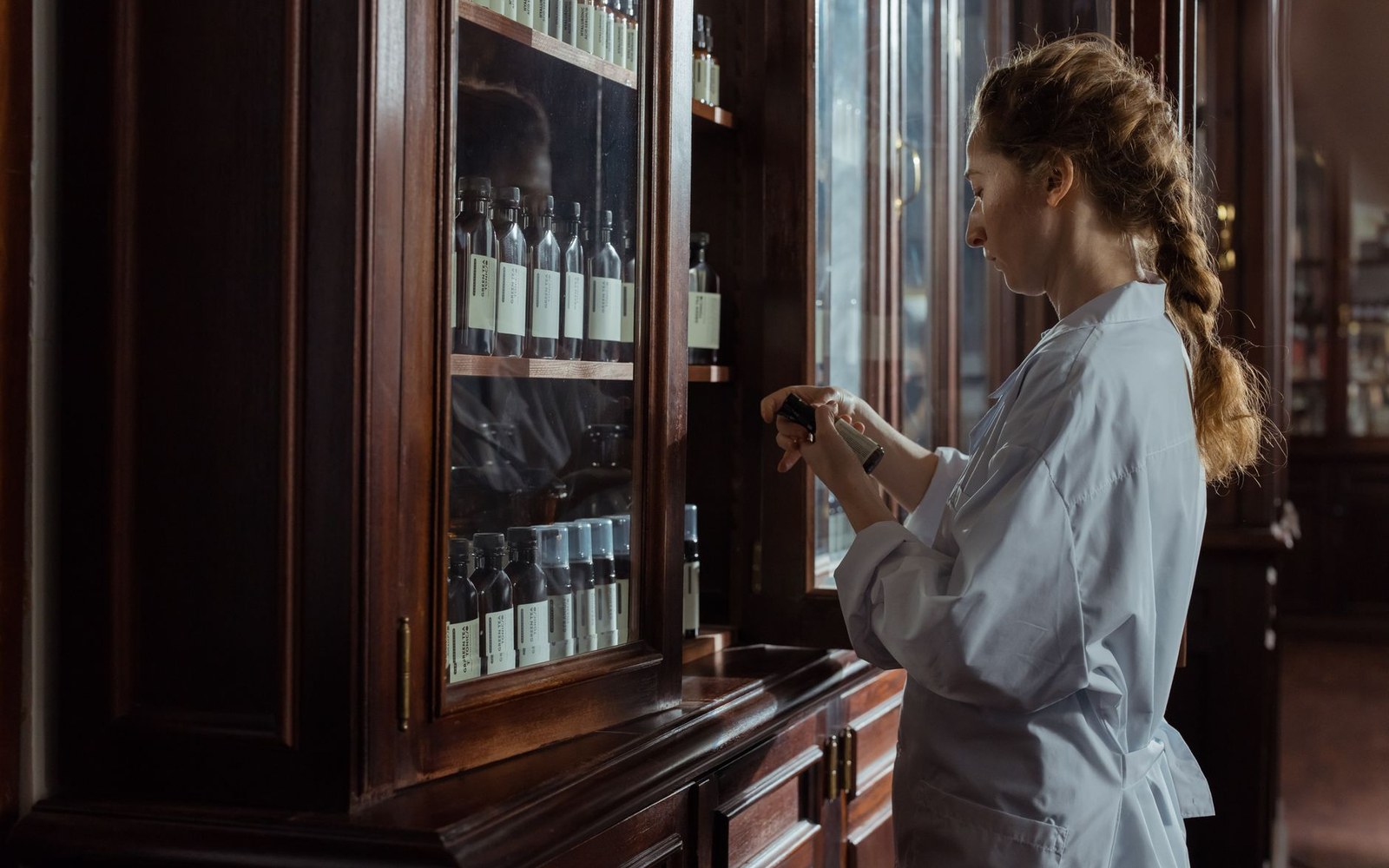
Labelled by remedy and by potency; what is inside each vial is sugar.Photo: cottonbro studio / Pexels
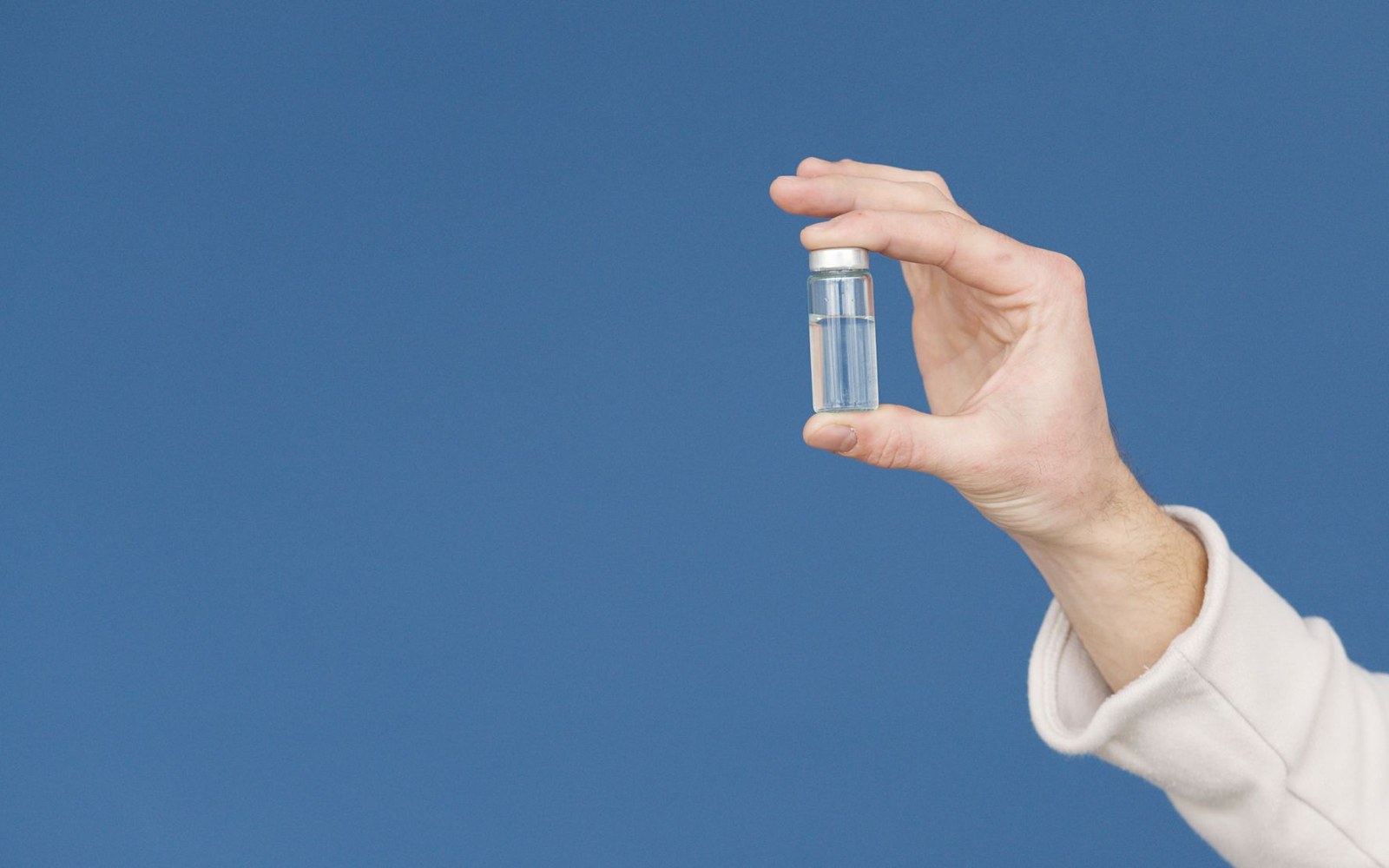
One vessel, emptied and refilled, instead of a fresh vial at every step.Photo: Artem Podrez / Pexels
The vial that never changes
Standard centesimal dilution uses a fresh vessel at every step: one part of the previous preparation is transferred into ninety-nine parts of solvent, the mixture is succussed, and the process repeats in a new container. Semyon Korsakov (1787–1853), a Russian civil servant and amateur homeopath, proposed a simpler alternative around 1829. In his method, a single vial is emptied and immediately refilled with fresh solvent. The residue clinging to the inner surface stands in for the one part that would otherwise be measured and transferred. Succussion follows, and the same vial is emptied and refilled again for the next step.
The arithmetic diverges from the standard calculation at the very first step. The multi-vial centesimal method assumes a 1-in-100 dilution at each stage, producing a dilution factor of 10⁻² per step and 10⁻⁶⁰ at 30C. The Korsakov method substitutes an estimate of how much liquid adheres to the glass. That residue volume depends on vessel geometry, surface properties, and drainage time — none of which are fixed by the notation "30K" on a label. Published estimates of the retained film have ranged across more than an order of magnitude, which means the assumed dilution factor per step is not a single number but a range. The resulting potency is therefore arithmetically different from its centesimal counterpart at the same nominal number.

Sixty zeros, written out.Photo: https://kaboompics.com/ / Pexels
Korsakov communicated his method to Hahnemann, who did not adopt it in the Organon but did not formally condemn it either. It spread in Russia and parts of continental Europe during the nineteenth century and remains in use today. The Homeopathic Pharmacopoeia of the United States ↗ — the document that sets manufacturing standards for the American market — carries a Korsakov section alongside the standard multi-vial centesimal and decimal procedures, acknowledging both as recognised preparation routes. Preparations made by the Korsakov method are conventionally labelled with a number followed by the letter K, distinguishing them from C-scale preparations even when the step-count is identical.
The practical consequence is that two preparations labelled, say, "30" can represent genuinely different dilution histories depending on which method was used. The standard centesimal assumes a precise 1:100 ratio at each step; the Korsakov method assumes only that drainage leaves a reproducible film, an assumption that has never been fixed to a single internationally agreed value. As a matter of arithmetic, the K-notation and the C-notation are not interchangeable, and the residual-film variable means that Korsakov potencies carry an uncertainty in their dilution factor that the multi-vial method, by design, does not.
The material behind this piece
- c. 1829Korsakov proposes the single-vial method
- 17871853 — dates of Semyon Korsakov
- HPUSincludes Korsakov method as a recognised preparation route (current edition)