France Announced in 2019, and the Last Reimbursements Fell in 2021
The French Haute Autorité de Santé's 2019 assessment, the government announcement of the phased withdrawal of Sécurité Sociale reimbursement for homeopathic products, and the completion of that withdrawal in 2021.
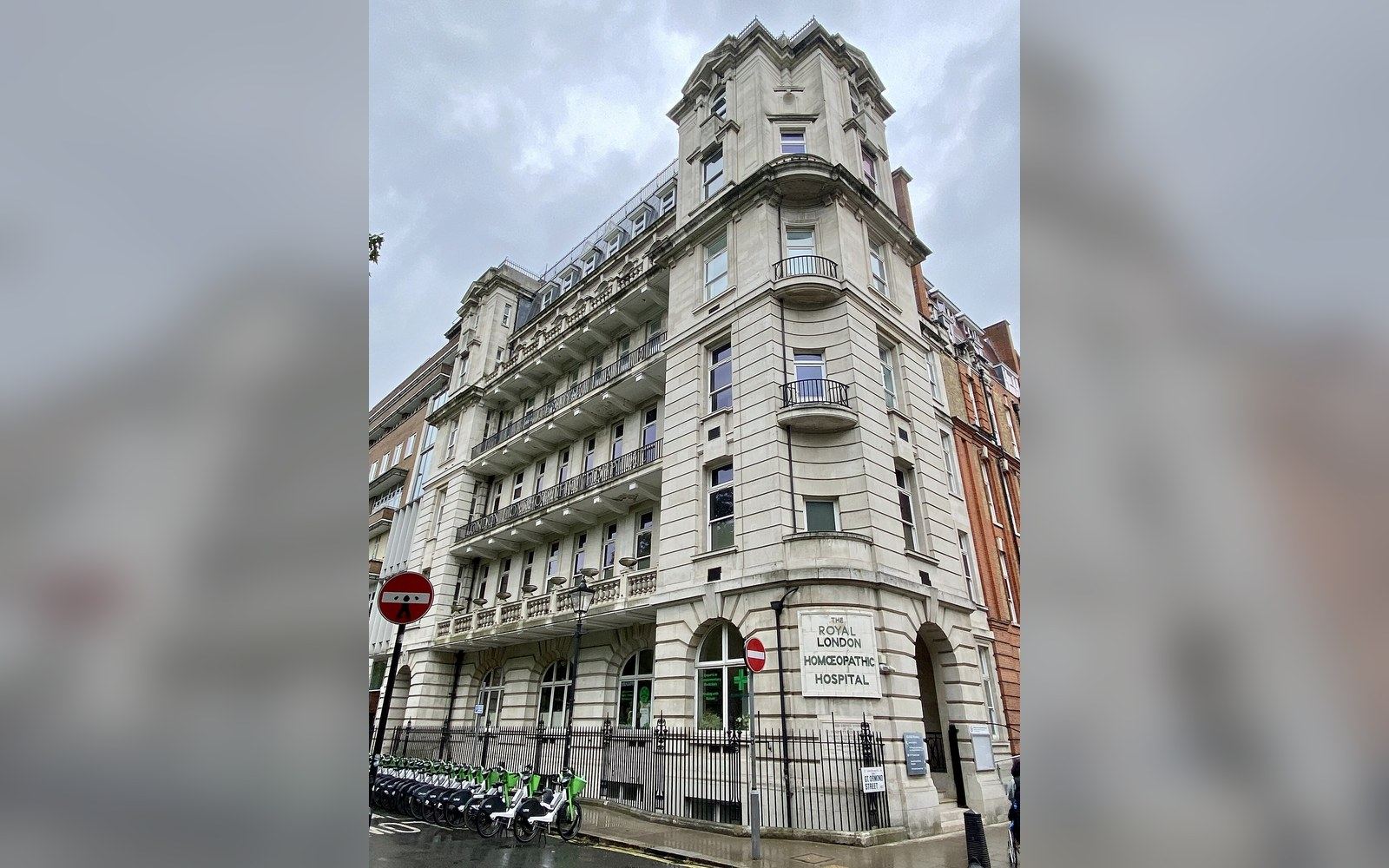
Great Ormond Street. The building kept its function and changed its name in 2010.Photo: Royal London Homoeopathic Hospital, Great Ormond Street, Bloomsbury, May 2024 · Wikimedia Commons
Announced in 2019, phased, and complete in 2021.Photo: Joaquin Carfagna / Pexels
The Haute Autorité de Santé reviewed the evidence, the government accepted the findings, and Sécurité Sociale reimbursement ended in stages.
The Assessment and the Decision
In June 2019, France's Haute Autorité de Santé — the independent authority that advises the government on which medical products and procedures public insurance should cover — published its assessment of homeopathic products. The HAS concluded that the evidence of clinical efficacy was insufficient and that the "medical service rendered" (service médical rendu) by these products did not meet the threshold required for reimbursement under the national health insurance scheme, Sécurité Sociale. The assessment covered the full range of homeopathic preparations listed for reimbursement, not a selection.
The conclusions section, where a review states its own finding rather than a summary of it.Photo: MART PRODUCTION / Pexels
The government accepted the HAS conclusion. Health Minister Agnès Buzyn announced in July 2019 that reimbursement would be withdrawn in two stages rather than immediately, a schedule designed to give prescribers, pharmacists and patients time to adjust. The phased approach was a political calibration, not a scientific one: the HAS finding itself was unambiguous.
The Withdrawal in Stages
Under the timetable set by the government, Sécurité Sociale reimbursement fell from its existing rate — thirty percent for most listed homeopathic products — to fifteen percent on 1 January 2020. The remaining fifteen percent was removed on 1 January 2021, completing the withdrawal. From that date, homeopathic products remained legal and available in French pharmacies but were no longer reimbursed by the public insurance system. Patients who wished to continue purchasing them paid the full cost.
- June 2019HAS publishes its assessment; service médical rendu rated insufficient
- July 2019Health Minister Agnès Buzyn announces phased withdrawal
- 1 January 2020reimbursement rate cut from 30 % to 15 %
- 1 January 2021remaining reimbursement removed; withdrawal complete
France had been one of a small number of European countries where a meaningful share of homeopathic products carried public reimbursement. The HAS assessment ↗ drew on published systematic reviews and trial data, applying the same service médical rendu framework used for conventional pharmaceuticals. The conclusion aligned with positions already taken by bodies including the European Academies Science Advisory Council ↗, which in 2017 had called on EU member states to end public funding of homeopathic products where evidence of efficacy was absent.
The 2021 completion of the French withdrawal was among the most consequential single policy steps taken in Europe, given France's historically high consumption of homeopathic products and the size of the Boiron company, headquartered in Lyon, whose products had dominated the reimbursed market.