Père Lachaise, Division 22
The monument to Hahnemann (1755–1843) at Père Lachaise cemetery in Paris — its location, the inscription it carries, and how it was established.
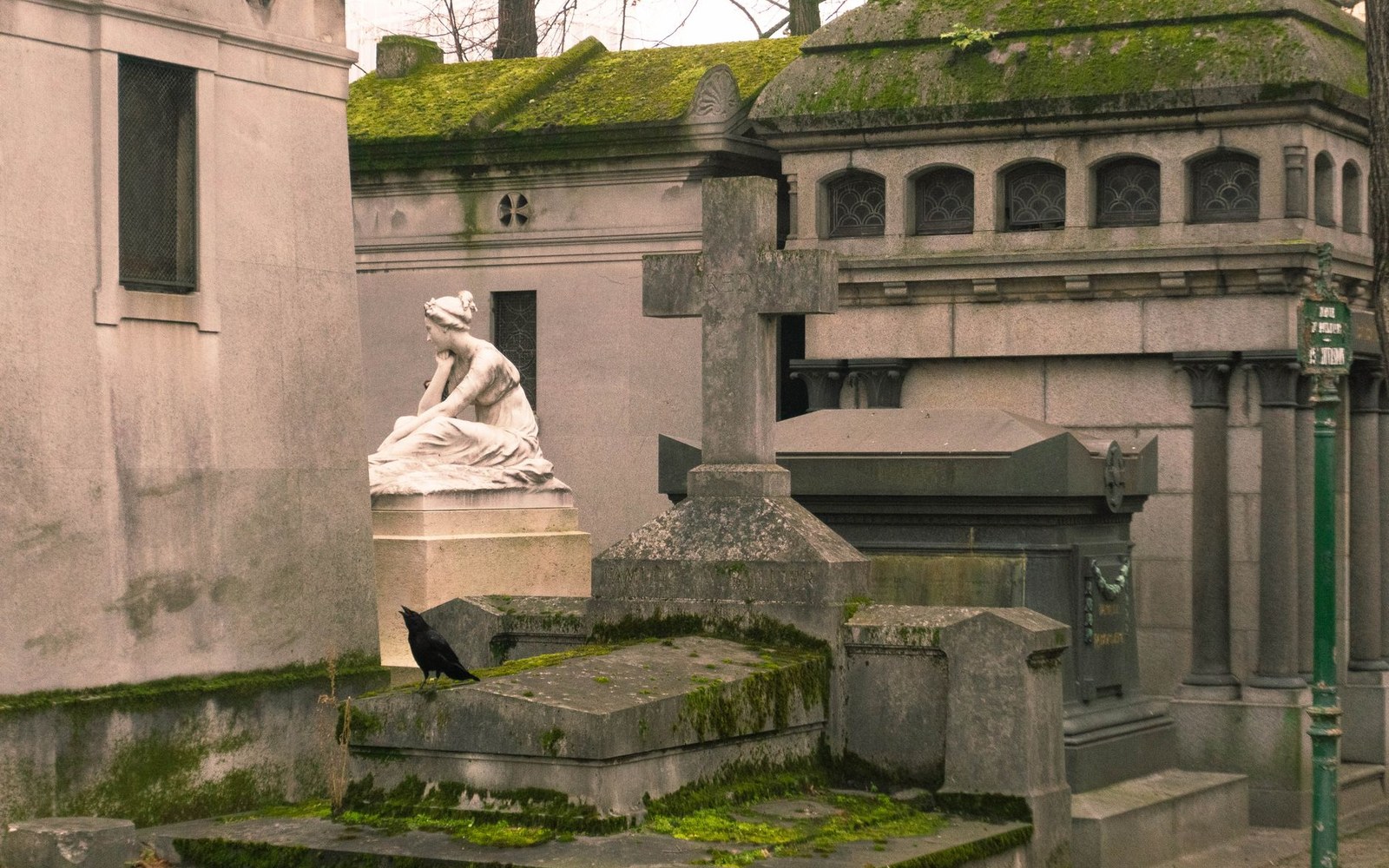
Division 22, Père Lachaise.Photo: Raylarında Şehrin / Pexels
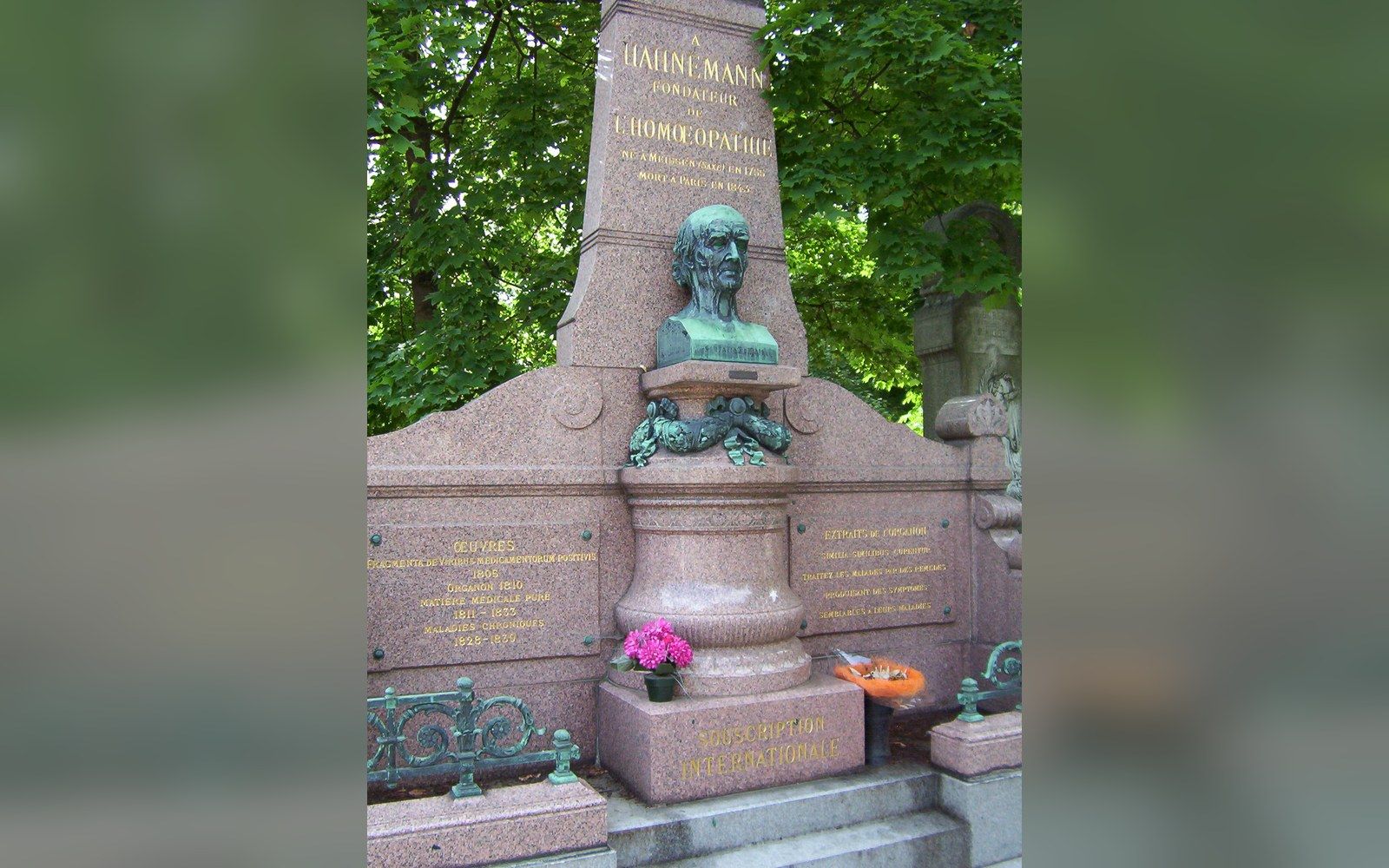
Raised by international subscription; the inscription lists his works and their dates.Photo: Père-Lachaise - Division 19 - Samuel Hahnemann · Wikimedia Commons
The grave of homeopathy's founder has stood in a Paris cemetery since 1900, when the international homeopathic community erected a monument over his remains.
The Monument and What It Records
Samuel Hahnemann died in Paris on 2 July 1843, at the age of eighty-eight. He had moved to the French capital in 1835 with his second wife, Mélanie d'Hervilly, and continued to practise and revise his work there until his death. His remains were initially interred at the Montmartre cemetery, then transferred in 1898 to Père Lachaise — Paris's largest municipal cemetery, established by Napoleon in 1804 — where they were placed in Division 19.

The first edition, Dresden, 1810. Hahnemann set out the centesimal method in its passages on preparation and revised them in every edition after.Photo: Marta Branco / Pexels
The monument erected over the grave in 1900 was funded by international homeopathic societies, along with contributions from homeopathic organisations in Europe and the Americas. It is a chest-tomb in grey granite, designed with deliberate solemnity: a recumbent effigy of Hahnemann lies on the lid, his features carved in the convention of nineteenth-century memorial sculpture. The inscription on the monument includes the Latin phrase similia similibus curentur — "let likes be cured by likes" — the founding axiom Hahnemann derived from his 1790 cinchona self-experiment and formalised across successive editions of the Organon der rationellen Heilkunde, first published in 1810. A further inscription gives his dates and identifies him as the founder of homeopathy.
The tomb sits at coordinates approximately 48.8614° N, 2.3947° E within the cemetery grounds, in a cemetery that also holds the graves of Frédéric Chopin, Oscar Wilde and Marcel Proust — a detail that reflects Père Lachaise's dual status as active municipal burial ground and historical landmark ↗. Division 22 is accessible from the main Rue du Repos entrance on the eastern boundary of the 20th arrondissement.
- 2 July 1843Hahnemann dies in Paris, aged 88
- 1835Hahnemann relocates to Paris with Mélanie d'Hervilly
- 1898remains transferred from Montmartre to Père Lachaise
- 1900granite monument inaugurated in Division 22
The monument has become an identifiable point of reference for the institutional history of homeopathy: not a site of clinical practice, but an address that appears in the documentary record of international congresses, anniversary publications and the founding paperwork of organisations tracing their lineage to Hahnemann's Leipzig circle. The Organon's publication history — five editions in Hahnemann's lifetime and a sixth published posthumously — is the textual counterpart to the physical memorial: both serve as anchoring documents for the field's self-presentation.
Hahnemann's name appears on the grave without professional titles of the era's conventional medicine, a deliberate choice recorded in period accounts of the dedication ceremony. The stone gives the date of the monument's inauguration as 1900, and it remains maintained under the cemetery's heritage designation.