Rotterdam, 1925: How the LMHI Was Constituted
The founding of the Liga Medicorum Homoeopathica Internationalis in Rotterdam in 1925, its stated purpose, its congress series, and the 70th congress held in Rio de Janeiro in 2015 — the year this domain is named for.

The first edition, Dresden, 1810. Hahnemann set out the centesimal method in its passages on preparation and revised them in every edition after.Photo: Marta Branco / Pexels
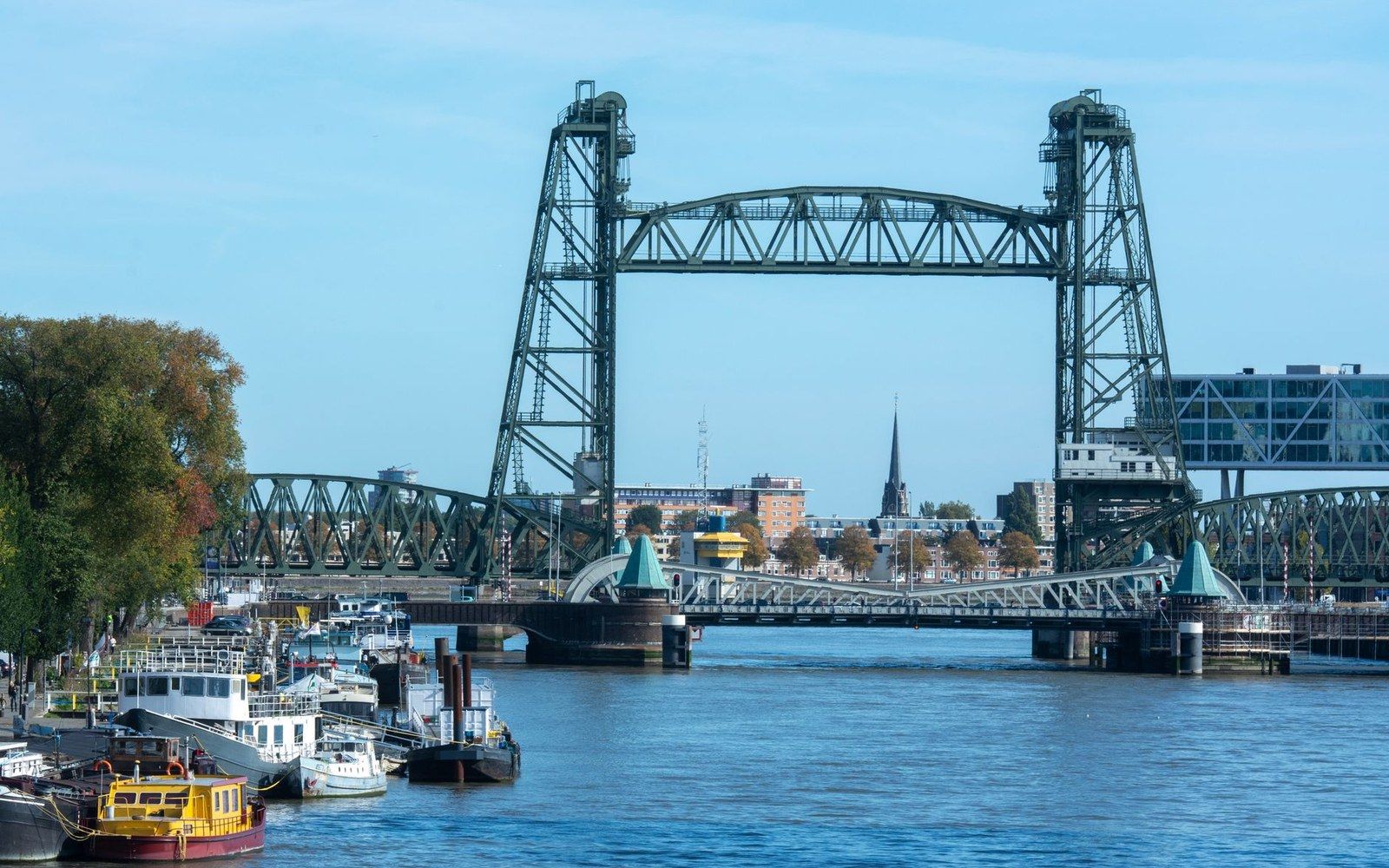
Rotterdam. The Liga has held congresses since its constitution here.Photo: Jan van der Wolf / Pexels
The oldest international body in homeopathy was formed in a Dutch port city, ninety years before its seventieth congress.
A Constitution Written in Rotterdam
The Liga Medicorum Homoeopathica Internationalis — known universally by its initialism, LMHI — was constituted in Rotterdam in 1925. Its founders were physicians who had concluded that the national homeopathic societies then operating across Europe and the Americas were working in isolation, without a shared forum for clinical exchange or collective institutional representation. Rotterdam gave them a meeting point and a founding document; the city's name appears in the organisation's earliest records as the seat of its constitution.
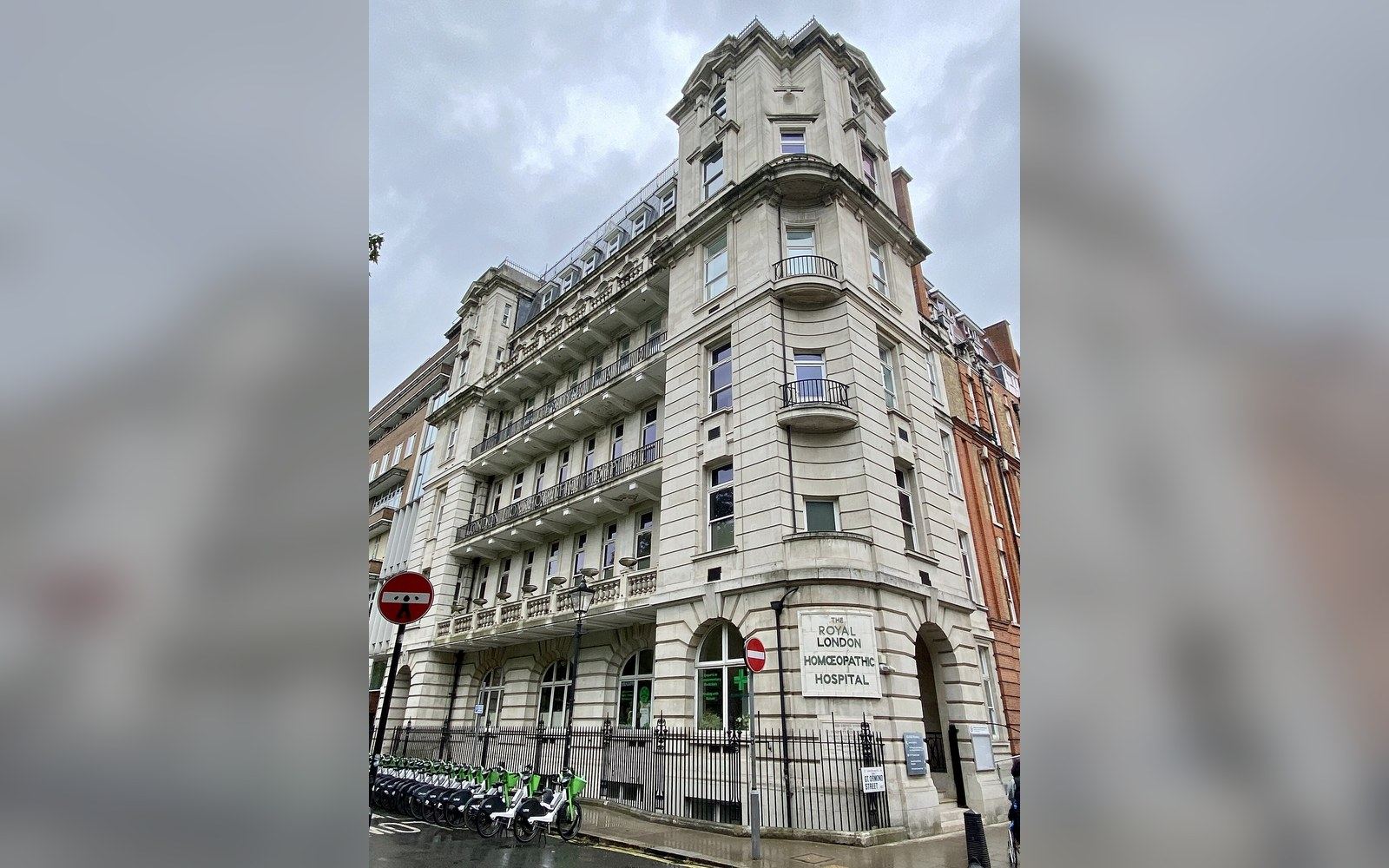
Great Ormond Street. The building kept its function and changed its name in 2010.Photo: Royal London Homoeopathic Hospital, Great Ormond Street, Bloomsbury, May 2024 · Wikimedia Commons
The stated purpose was coordination: to connect homeopathic physicians across national boundaries, to organise periodic congresses at which papers could be presented and debated, and to maintain a continuous institutional identity between those congresses. The LMHI describes itself as a medical organisation — membership is formally restricted to licensed physicians and pharmacists — which has shaped how it presents itself to health ministries and international bodies throughout its history.
Ninety Years of Congresses
The congress series is the LMHI's most visible output. Held annually or near-annually, each congress is hosted by a national member association and carries a sequential number; the count functions as the organisation's institutional calendar. Early congresses were concentrated in Europe, reflecting where most member societies were based and where homeopathic practice retained a degree of institutional presence — in hospital networks, in pharmacopoeial recognition, and in university-adjacent teaching.
- 1811Avogadro publishes his molecular hypothesis
- 1844British Homoeopathic Society founded, London
- 1925LMHI constituted in Rotterdam
- 201570th LMHI Congress held in Rio de Janeiro
By the latter half of the twentieth century the congress had travelled further: to the Americas, to South Asia, and to the Asia-Pacific. The Faculty of Homeopathy, whose origins lie in the British Homoeopathic Society, founded in London in 1844 and one of the oldest national bodies in the field, has been among the European organisations with sustained representation at LMHI gatherings. The Hahnemann Medical College in Philadelphia, the Central Council for Research in Homoeopathy in India, and counterparts in France, Germany and Brazil have all figured in the LMHI's member roster at various points, though membership composition has shifted across decades.
The organisation publishes the Homeopathic Links journal in association with affiliated publishers and maintains an official relationship with the Homeopathic Pharmacopoeia of the United States, whose standards committee has overlapped with LMHI networks. Its congresses have also served as the platform from which position statements on pharmacopoeial standards and educational requirements have been circulated — though the LMHI has no regulatory authority over any national body.
The Seventieth Congress, Rio de Janeiro, 2015
The figure that makes 2015 the year this record is dated to is simple arithmetic: the LMHI's founding in 1925, ninety years earlier, places its seventieth congress in that year. The 2015 congress was held in Rio de Janeiro ↗, a city whose national homeopathic tradition runs to the nineteenth century — Brazil was among the early South American countries to establish a formal homeopathic medical society, and homeopathy retains a recognised status within the Brazilian public health system, listed by the Brazilian Ministry of Health among its integrative and complementary practices.
The choice of Rio de Janeiro for the seventieth congress reflected both the LMHI's expansion into the southern hemisphere and the institutional weight of Brazilian homeopathic medicine by 2015. The congress format follows the same template established at founding: plenary sessions, national society reports, and the formal business of the organisation's governing assembly.
Nineteen twenty-five was not a year of particular external recognition for homeopathy. Amedeo Avogadro's constant had been reliably measured by then, and its arithmetic implications for high-dilution preparations were available to anyone who applied them — though systematic reviews applying that arithmetic to clinical evidence lay decades away. The LMHI's founding documents make no reference to the dilution question; their concern was governance, congress organisation, and physician membership criteria. Those founding priorities have defined the organisation's institutional character ever since.