Three Manufacturers and Their Founding Dates
Boiron (founded Lyon, 1932), Weleda (founded Arlesheim, 1921) and Heel (founded Baden-Baden, 1936) as the principal named manufacturers — their founding, their pharmacopoeial reference standards, and their regulatory registrations. No therapeutic claims.

The first edition, Dresden, 1810. Hahnemann set out the centesimal method in its passages on preparation and revised them in every edition after.Photo: Marta Branco / Pexels

Three companies, three founding dates, one set of pharmacopoeial reference standards.Photo: Brixiv / Pexels
The three companies that became the industry's reference points
The homeopathic manufacturing sector is dominated by three named companies, each founded in Europe during the first half of the twentieth century and each still operating under its original identity. Boiron, Weleda and Heel differ in their origins and corporate structures, but share a common regulatory situation: their preparations are listed in, or required to conform to, one or more of the recognised pharmacopoeias that govern homeopathic production.
Weleda was the earliest of the three. It was established in Arlesheim, Switzerland, in 1921, taking its name from a Germanic seeress of antiquity. Its founding was closely associated with Rudolf Steiner, the Austrian philosopher who developed anthroposophic medicine as a parallel system to orthodox practice, and whose ideas influenced the company's product philosophy from the outset. Weleda now operates manufacturing sites across Europe and holds registrations in multiple national markets; in Germany its preparations are assessed against the Homöopathisches Arzneibuch, the pharmacopoeia that governs homeopathic drug standards in that jurisdiction.

Great Ormond Street. The building kept its function and changed its name in 2010.Photo: Royal London Homoeopathic Hospital, Great Ormond Street, Bloomsbury, May 2024 · Wikimedia Commons
Boiron was founded in Lyon in 1932 by twin brothers Henri Boiron and Jean Boiron, both pharmacists. It grew into the largest single producer of homeopathic preparations by turnover. Its primary manufacturing operations remain centred on France, and its products are registered in accordance with the European Union's framework for homeopathic medicinal products established under Directive 2001/83/EC and its later amendments, which created a simplified registration procedure for homeopathic products making no therapeutic claims on their labelling. In the United States, Boiron products marketed over the counter are subject to the Homeopathic Pharmacopoeia of the United States ↗ (HPUS) standards, administered by the Homeopathic Pharmacopoeia Convention of the United States.
Heel — the name is an acronym of the Latin phrase Haematodes et Extracta e Liquidis — was founded in Baden-Baden in 1936 by Hans Heinrich Reckeweg, a German physician. Reckeweg developed a product line he termed homotoxicology, a theoretical framework that overlaps with but is distinct from classical Hahnemannian homeopathy; his preparations are typically combination products rather than single-substance preparations made to a strict centesimal or decimal potency series. Heel's regulatory registrations follow the same European Directive framework applicable to Boiron, and the company's German-market products are likewise assessed against the Homöopathisches Arzneibuch.
- 1921Weleda established, Arlesheim, Switzerland; associated with Rudolf Steiner
- 1932Boiron founded, Lyon, France; founders Henri Boiron and Jean Boiron, pharmacists
- 1936Heel founded, Baden-Baden, Germany; founder Hans Heinrich Reckeweg
Pharmacopoeial reference and regulatory registration
The pharmacopoeial standards that govern these three manufacturers set out monographs — individual entries for source materials and finished preparations — covering identity, purity, and the method of dilution and succussion. The HPUS, whose first edition appeared in 1897, remains the United States reference; the European Pharmacopoeia contains homeopathic monographs applicable across EU member states; and the German Homöopathisches Arzneibuch provides the national standard in Germany. Manufacturers must demonstrate conformity with the applicable standard in each market where they seek registration.
The EU simplified registration procedure, created to handle products whose dilution levels preclude standard efficacy demonstration, requires manufacturers to provide documentation of pharmaceutical quality and safety but does not require clinical trial data. Products registered under this route may not carry therapeutic indications on their labelling. Boiron, Weleda and Heel each hold registrations under this framework for portions of their European ranges.
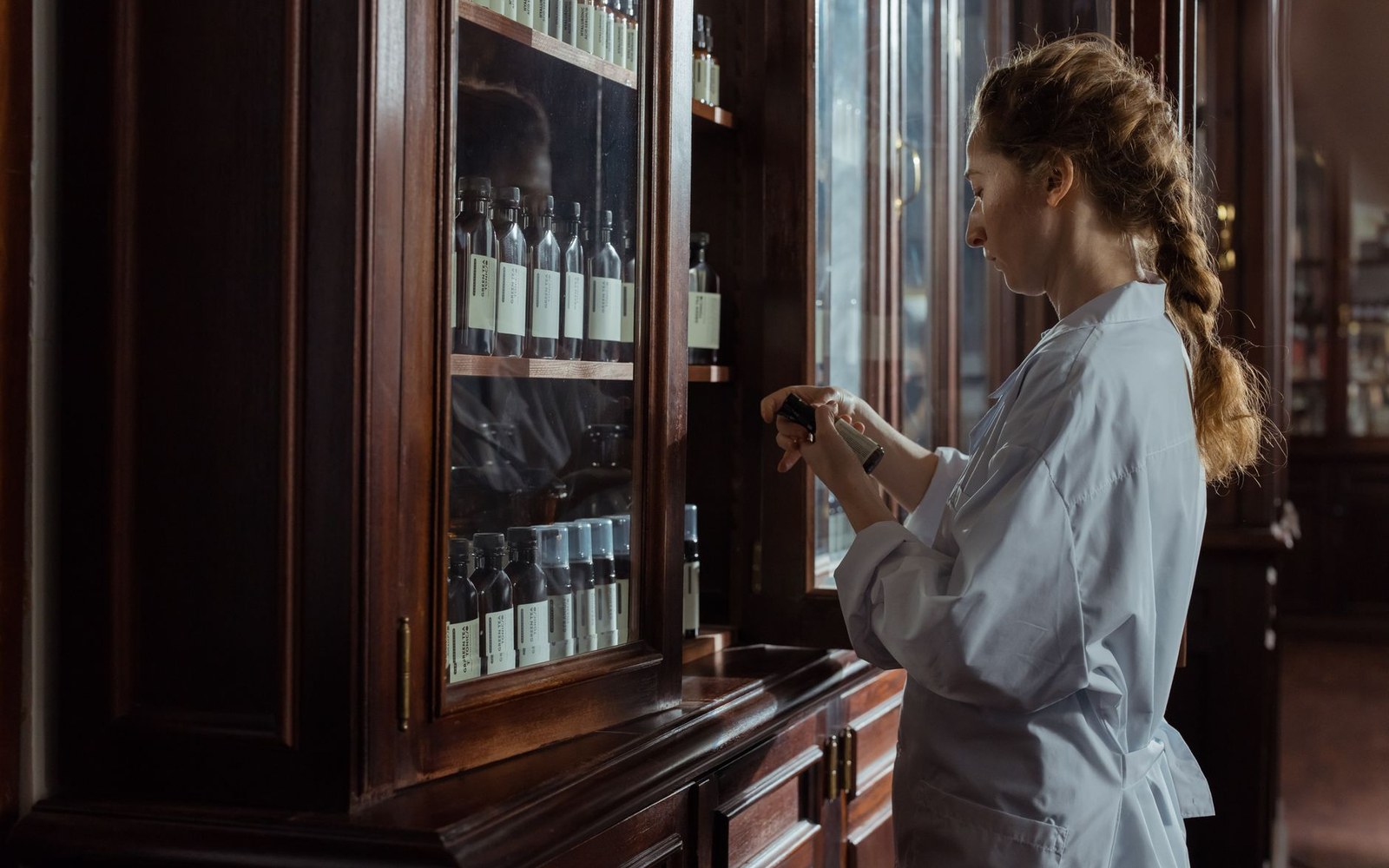
Labelled by remedy and by potency; what is inside each vial is sugar.Photo: cottonbro studio / Pexels
In the United States, the Federal Trade Commission's November 2016 enforcement policy statement ↗ on over-the-counter homeopathic products altered the disclosure requirements for companies including Boiron marketing products in that market. The policy statement specified that efficacy claims must be substantiated by competent scientific evidence, or accompanied by clear disclosure that there is no such evidence, placing new labelling obligations on all three companies' US-facing product lines.
The founding dates of all three — 1921, 1932, 1936 — fall within the interwar period, a moment when homeopathic manufacturing was consolidating from small apothecary production into industrial-scale pharmaceutical operations, and when the pharmacopoeial frameworks that still govern the sector were themselves being formalised.