The Faculty of Homeopathy: Founded 1844, Chartered 1950
The Faculty of Homeopathy's foundation in London in 1844, its royal charter, its relationship to the Royal London Homoeopathic Hospital, and its role in postgraduate qualification.

The first edition, Dresden, 1810. Hahnemann set out the centesimal method in its passages on preparation and revised them in every edition after.Photo: Marta Branco / Pexels
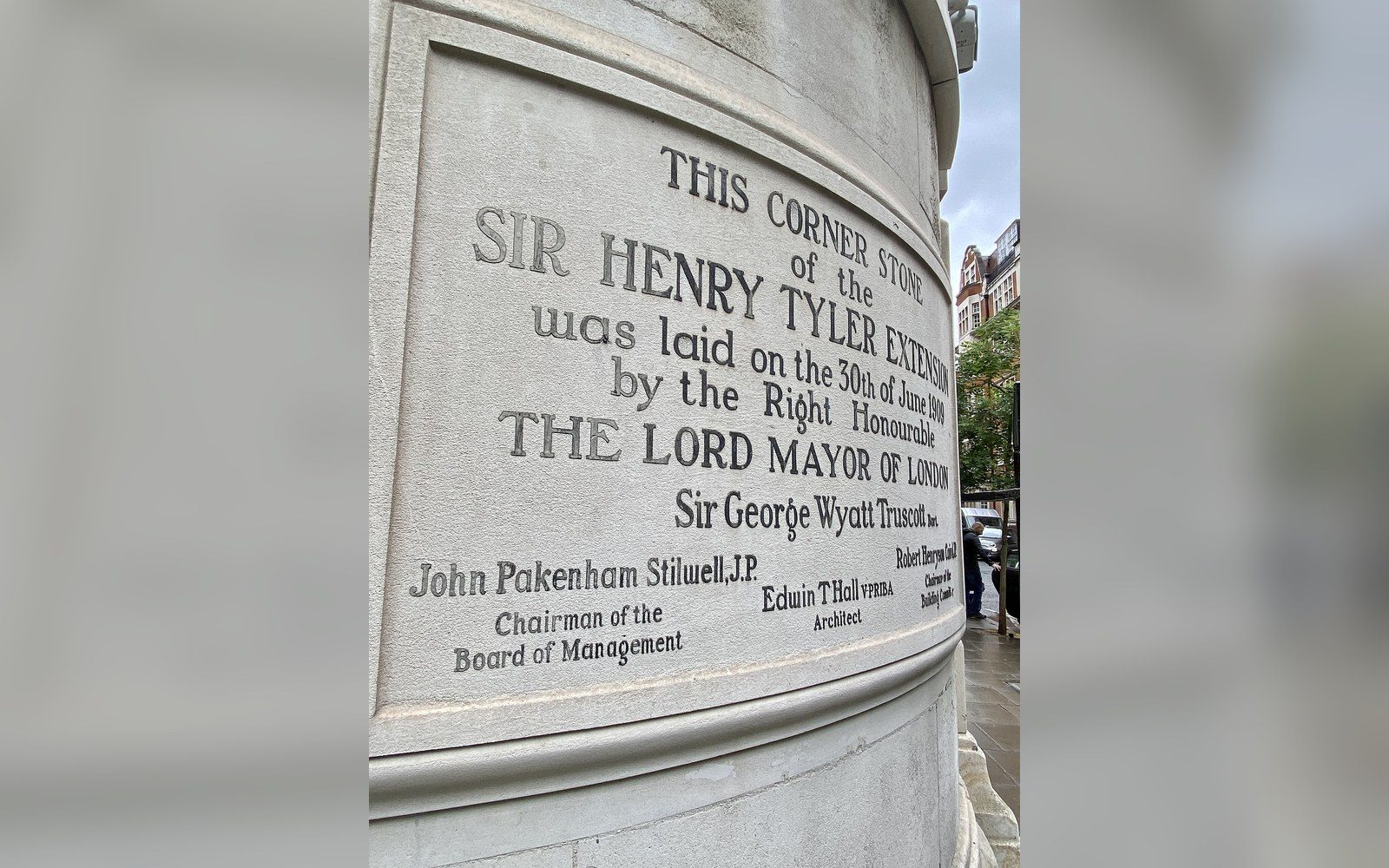
The foundation stone of the Sir Henry Tyler extension, laid in 1900.Photo: Foundation stone of the Sir Henry Tyler Extension, Royal London Homoeopathic Hospital, Great Ormond Street, May 2024 · Wikimedia Commons
Britain's Only Statutory Homeopathic Licensing Body
The Faculty of Homeopathy was established in London in 1844, making it one of the oldest institutional bodies in the world devoted to postgraduate training in homeopathy for registered medical professionals. Its founding came just one year after Hahnemann's death in Paris, and at a moment when homeopathy had begun attracting serious interest among qualified British physicians rather than lay practitioners alone.
The Faculty received its royal charter in 1950, a step that gave it statutory standing as the body responsible for examining and certifying doctors, nurses, pharmacists, dentists and veterinary surgeons who wished to practise homeopathy alongside their primary qualifications. The charter did not create a new profession; it formalised a postgraduate credential within existing regulated ones. Members and fellows hold designations — MFHom and FFHom respectively — appended to their primary professional titles.
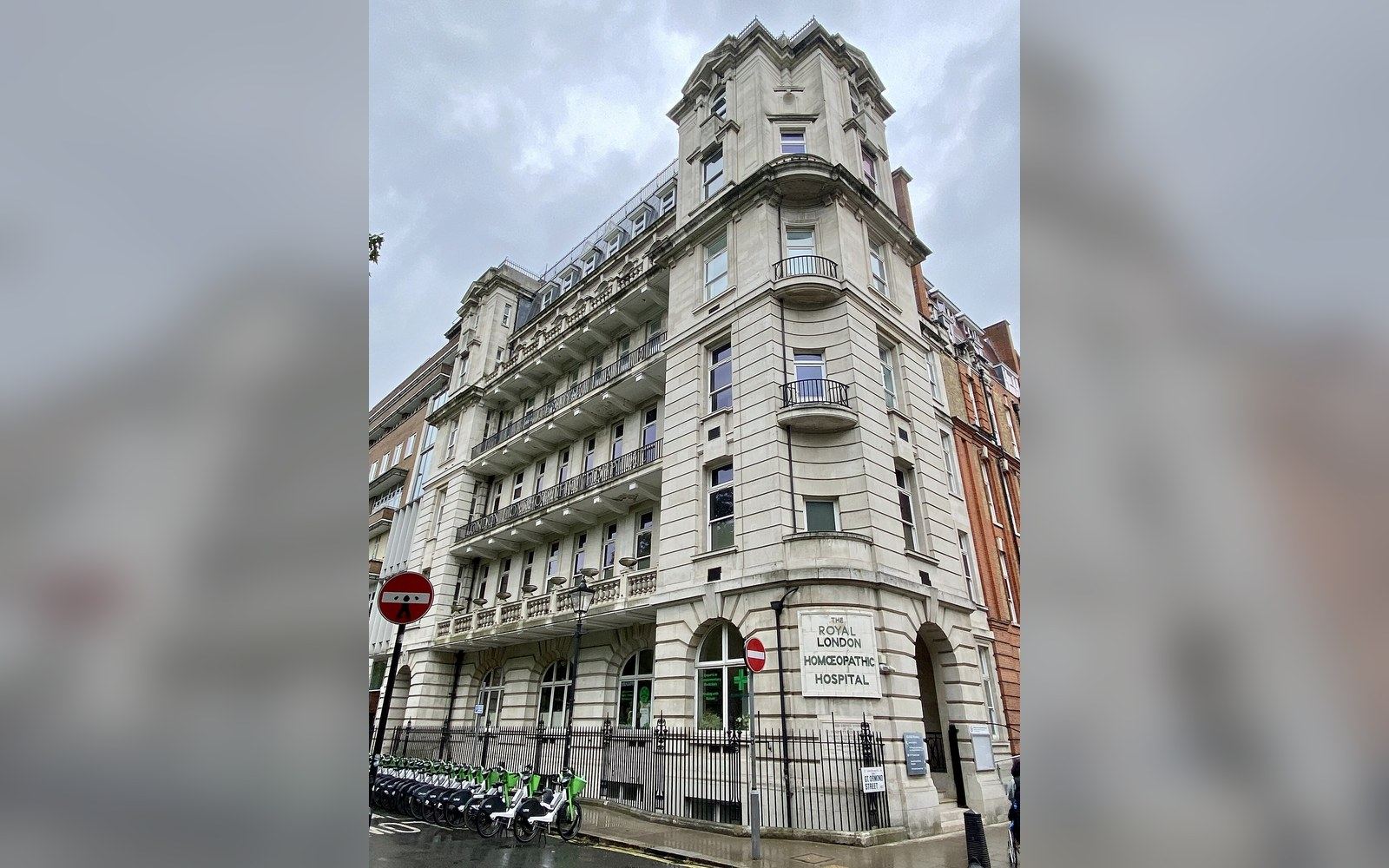
Great Ormond Street. The building kept its function and changed its name in 2010.Photo: Royal London Homoeopathic Hospital, Great Ormond Street, Bloomsbury, May 2024 · Wikimedia Commons
The Faculty's relationship with the Royal London Homoeopathic Hospital on Great Ormond Street has been close throughout its history. The hospital, which traces its own origins to the mid-nineteenth century, served as the principal clinical base for Faculty training for much of the twentieth century. When the hospital was later renamed the Royal London Hospital for Integrated Medicine, the Faculty remained a distinct body with its own governance, examinations and membership register.
- 1844Faculty of Homeopathy founded in London
- 1911British Homeopathic Journal first published
- 1925 LMHI founded inRotterdam (international counterpart organisation)
- 1950Royal charter granted, giving the Faculty statutory standing
- 2018NHS England ends routine homeopathy prescribing, affecting Faculty-trained practitioners' NHS clinical base
The Faculty has always required that its candidates hold prior registration with a recognised statutory body — the General Medical Council in the case of doctors — before sitting Faculty examinations. This requirement set it apart from bodies that trained practitioners without prior conventional qualification. The Liga Medicorum Homoeopathica Internationalis, founded in Rotterdam in 1925, represents the international counterpart: a membership organisation for medically qualified homeopathic physicians, with which the Faculty maintains formal ties.
By the early twenty-first century the Faculty faced the same institutional pressures affecting British homeopathy more broadly. NHS England's 2018 decision to remove homeopathy from routine prescribing reduced the clinical settings in which Faculty-trained practitioners could work within the public health service. The Faculty continued to issue qualifications and publish its journal, the British Homeopathic Journal — now titled Homeopathy ↗ and published by Elsevier — which has appeared since 1911 and constitutes one of the longer-running records of clinical and theoretical writing in the field.
The Faculty of Homeopathy's current website ↗ sets out the charter, the qualification structure and membership categories as they stand today. The 1844 foundation date and the 1950 charter remain the two institutional coordinates from which everything else in its history is measured.