The Building on Great Ormond Street, and Its Two Names
The Royal London Homoeopathic Hospital from its nineteenth-century founding through its 2010 renaming as the Royal London Hospital for Integrated Medicine — the building, the NHS trust, and the name change documented from official sources.

The first edition, Dresden, 1810. Hahnemann set out the centesimal method in its passages on preparation and revised them in every edition after.Photo: Marta Branco / Pexels
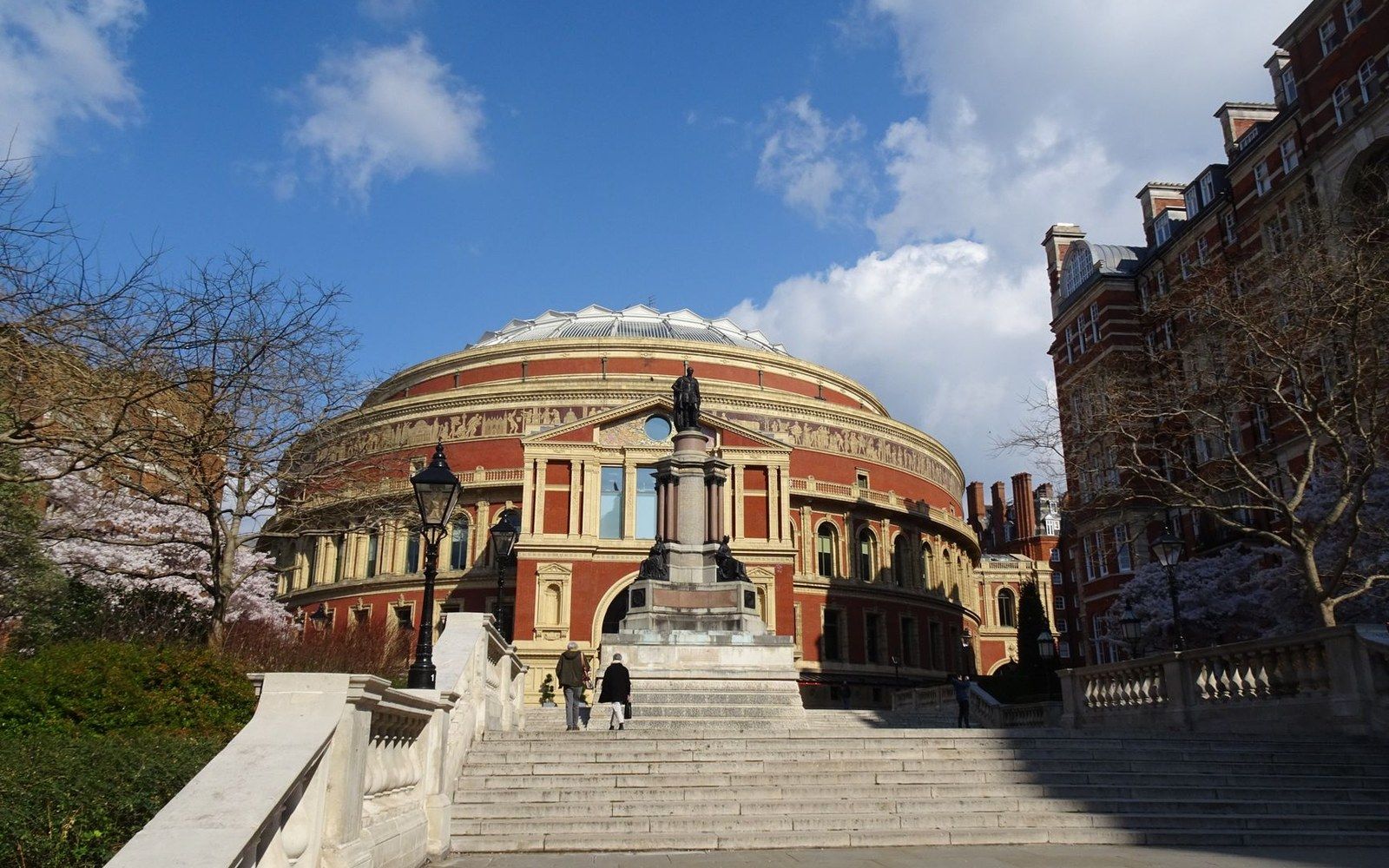
Two names, one building, one NHS trust.Photo: Lajos Kristóf Kántor / Pexels
A Dispensary, Then a Hospital
The institution that stands on Great Ormond Street in London has carried two official names across its history, and the gap between them is itself a document of changing institutional politics. It began not on that street at all, but as a homeopathic dispensary in Golden Square, opened in 1849 by Frederick Quinn, a physician who had trained under Samuel Hahnemann in the final years of Hahnemann's life in Paris. Quinn was the first licensed homeopathic practitioner in Britain, and his dispensary was the seed from which a formal hospital grew.
The London Homoeopathic Hospital opened in its own premises in 1850. It moved to Great Ormond Street in 1859, occupying a site that placed it, with some irony, directly opposite what would become the world-famous Great Ormond Street Hospital for Children. The institution received its royal designation in 1948, when the newly formed National Health Service absorbed it into the public system: it became the Royal London Homoeopathic Hospital, the word royal reflecting a longstanding association with the Crown that pre-dated the NHS. Queen Adelaide had been among its early patrons; subsequent royal warrants reinforced the designation across the following decades.
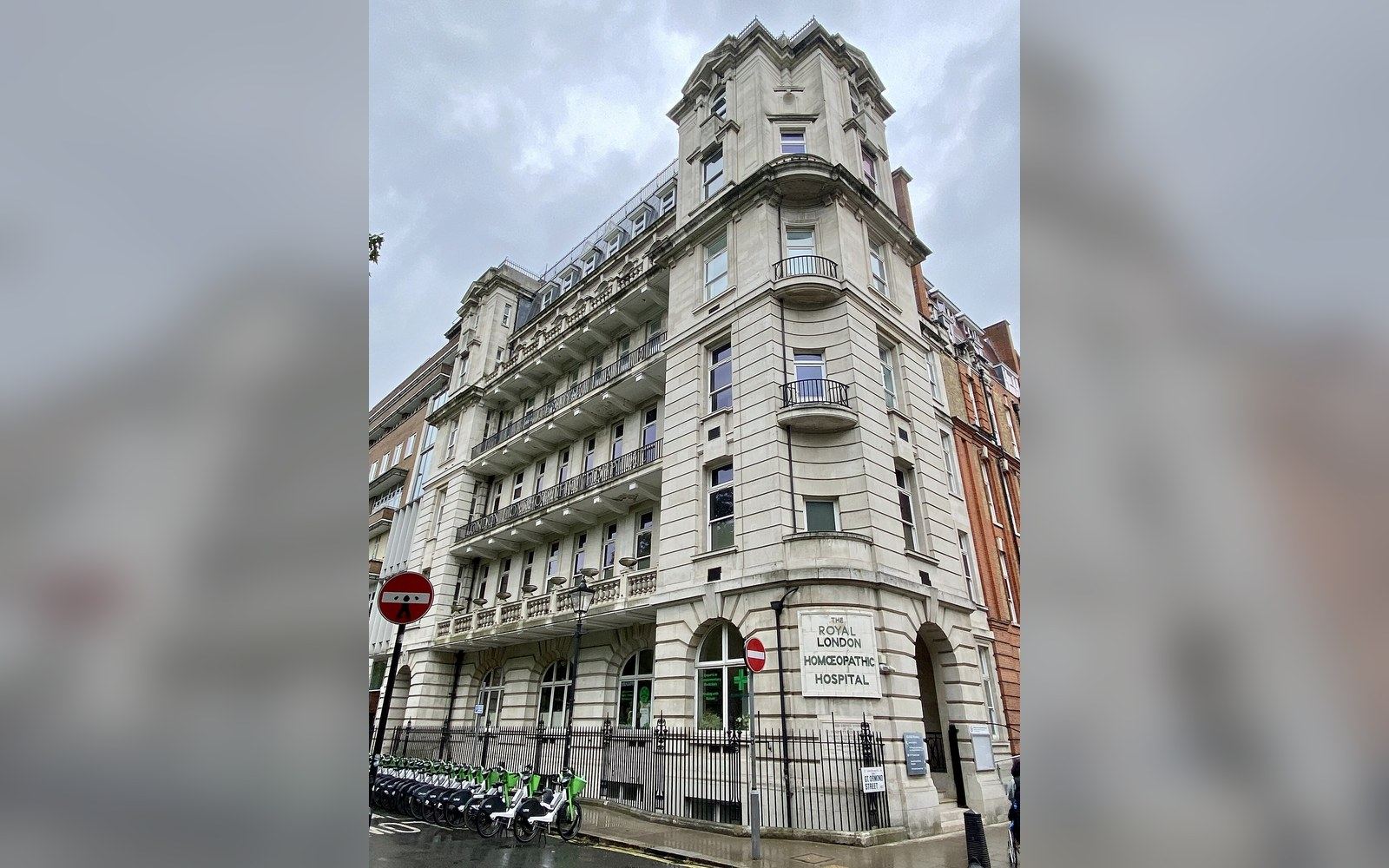
Great Ormond Street. The building kept its function and changed its name in 2010.Photo: Royal London Homoeopathic Hospital, Great Ormond Street, Bloomsbury, May 2024 · Wikimedia Commons
Inside the NHS
The Royal London Homoeopathic Hospital's absorption into the NHS in 1948 gave it a complicated status. It was a specialist referral hospital within a system that funded treatments on the basis of clinical evidence — a standard that would, by the early twenty-first century, become increasingly difficult for homeopathic services to meet. Through the latter half of the twentieth century it offered homeopathy alongside a range of what it described as complementary therapies: acupuncture, herbal medicine, and allied services. Patient numbers and the scope of provision fluctuated with NHS commissioning decisions and with the hospital's shifting relationship to its host trust.
By the mid-2000s, the hospital was managed under University College London Hospitals NHS Foundation Trust. Referrals came from across England, making it the principal NHS facility for homeopathic treatment in the country. A second NHS homeopathic hospital operated in Bristol, and outpatient homeopathic services ran in Glasgow and Liverpool, but the Great Ormond Street site was the most prominent and the most closely watched. It was during this period that NHS funding decisions ↗ for homeopathy and allied services came under sustained parliamentary scrutiny, with the House of Commons Science and Technology Committee's 2010 Evidence Check inquiry examining the evidence base for public spending on homeopathy and naming the Royal London Homoeopathic Hospital explicitly in its proceedings.
- 1849Frederick Quinn opens a homeopathic dispensary in Golden Square, London
- 1850London Homoeopathic Hospital formally established in its own premises
- 1859Hospital moves to Great Ormond Street
- 1948NHS absorbs the hospital; it becomes the Royal London Homoeopathic Hospital
- 2010Renamed the Royal London Hospital for Integrated Medicine (RLHIM)
- 2018NHS England removes homeopathy from routine GP prescribing
The Renaming of 2010
In 2010 the hospital was officially renamed the Royal London Hospital for Integrated Medicine. The trust described the change as reflecting the broader range of services the facility provided; the word homoeopathic was removed from the title entirely. The renaming was noted and reported by the British Medical Journal and attracted comment from both supporters and critics of homeopathy in the UK, though the institution itself framed the change in administrative rather than ideological terms.
The new name — Royal London Hospital for Integrated Medicine, abbreviated RLHIM — preserved the royal designation and the Great Ormond Street address. The physical building was not altered by the change. What altered was the public-facing identity of the institution and, by implication, the balance of services it would prioritise. University College London Hospitals NHS Foundation Trust ↗, which operates the site, describes the RLHIM today as providing specialist services in integrative medicine for patients with complex or chronic conditions, with homeopathy listed among the services available rather than foregrounded in the institution's title.
The trajectory from homoeopathic to integrated in the hospital's name runs parallel to the broader documentary record of NHS policy toward homeopathy: a gradual narrowing of public funding, accelerating after the 2010 Evidence Check report and culminating in NHS England's 2018 decision to remove homeopathy from the list of treatments that general practitioners could routinely prescribe. The building on Great Ormond Street remains open. Its second name tells most of the story its first name does not.