Hahnemann Medical College, Philadelphia, 1848
Constantine Hering's founding of the Homoeopathic Medical College of Pennsylvania in Philadelphia in 1848 (chartered 1867 as Hahnemann), its later history, and its place as the first such institution in the United States. Named place, named founder.

The first edition, Dresden, 1810. Hahnemann set out the centesimal method in its passages on preparation and revised them in every edition after.Photo: Marta Branco / Pexels
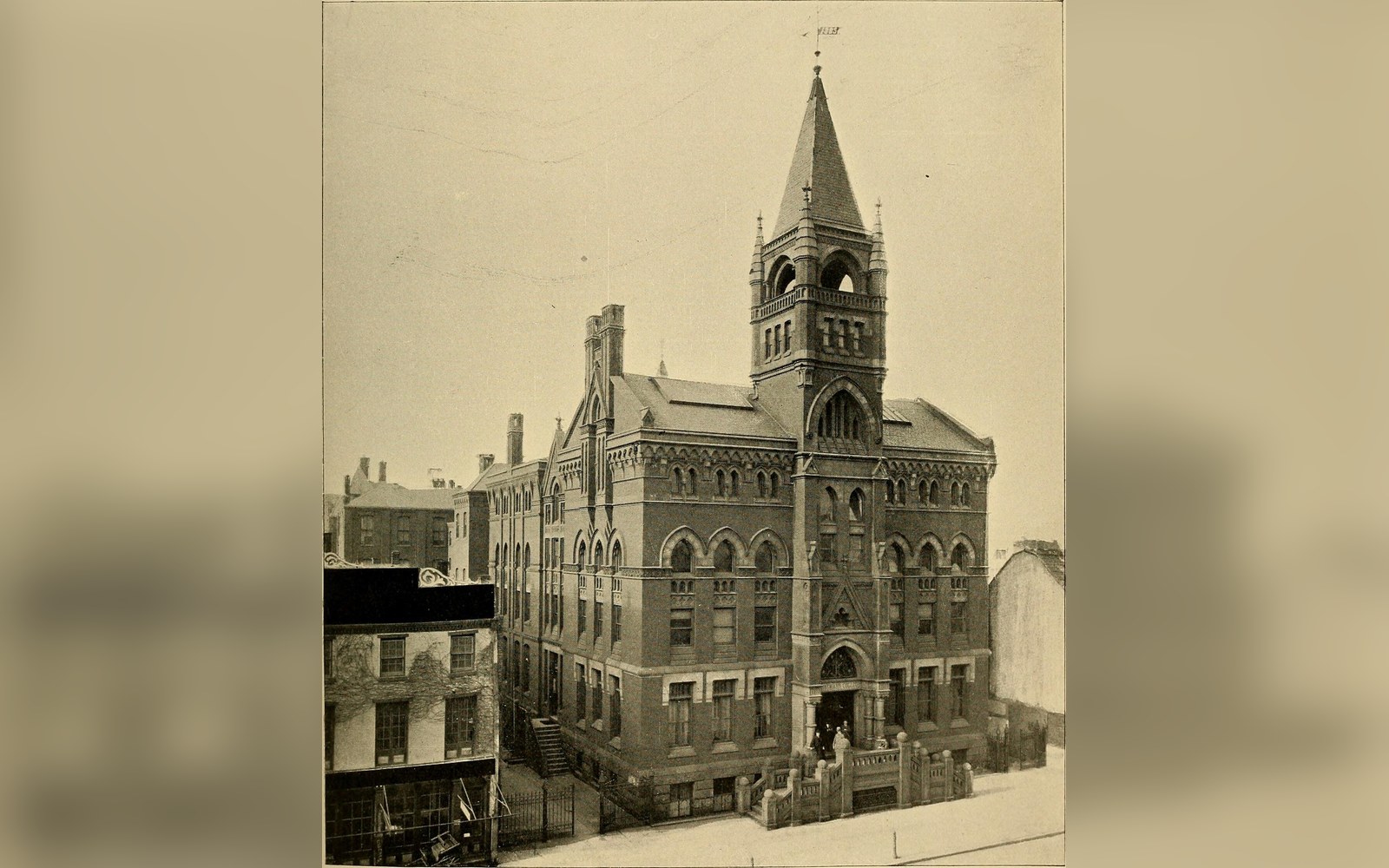
Philadelphia. Hering's college was the first of its kind in the United States.Photo: History of the Homoeopathic Medical College of Pennsylvania - the Hahnemann Medical College and Hospital of Philadelphia (1898) · Wikimedia Commons
The first institution to offer a full medical degree grounded in homeopathic principles opened in Philadelphia — and the man behind it had arrived in America as a former sceptic who became a convert to homeopathy.
From Leipzig to Philadelphia
Constantine Hering was a German physician who, as a young man, had been commissioned to write a refutation of homeopathy. Instead, conducting Hahnemann's experiments himself, he became a convinced practitioner. He emigrated to the United States in 1833, settling eventually in Philadelphia, and it was there that he anchored American homeopathic medicine institutionally.
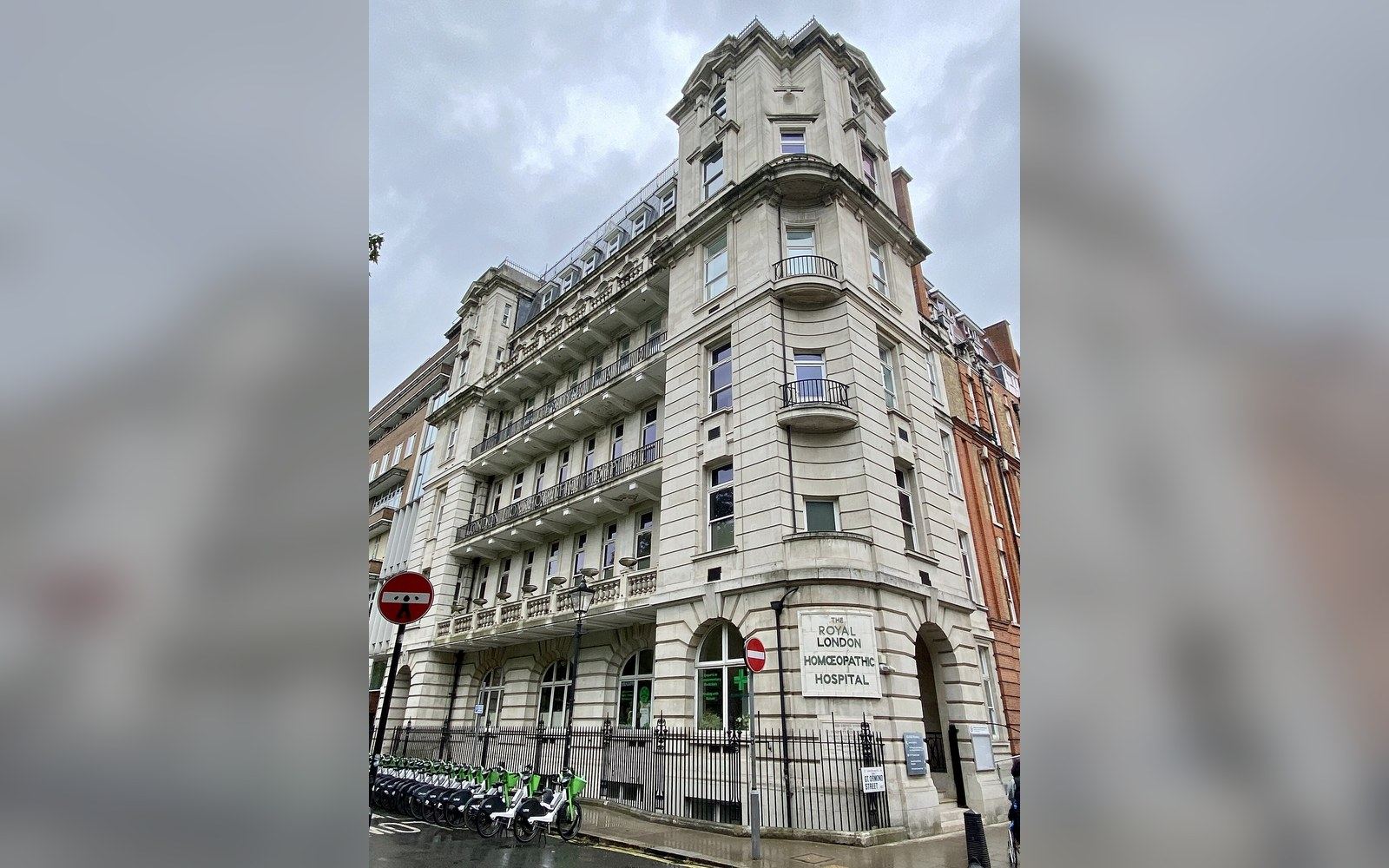
Great Ormond Street. The building kept its function and changed its name in 2010.Photo: Royal London Homoeopathic Hospital, Great Ormond Street, Bloomsbury, May 2024 · Wikimedia Commons
In 1848, Hering and his colleagues founded the Homoeopathic Medical College of Pennsylvania ↗ in Philadelphia — the first institution in the United States to award a medical degree explicitly on homeopathic principles. The college drew students from across the country and produced a faculty active in provings, publishing, and the expanding materia medica of the American homeopathic tradition.
Pennsylvania granted the institution a new charter in 1867, and under that charter it was renamed Hahnemann Medical College, in formal tribute to Samuel Hahnemann, whose Organon der rationellen Heilkunde of 1810 had established the theoretical framework the college taught. The renamed institution occupied successive buildings in central Philadelphia, expanding its clinical and didactic programmes through the final decades of the nineteenth century.
- 1833Constantine Hering arrives in Philadelphia
- 1848Homoeopathic Medical College of Pennsylvania founded by Hering in Philadelphia
- 1867Pennsylvania charter re-granted; institution renamed Hahnemann Medical College
- 1910Flexner Report; many sectarian medical colleges close; Hahnemann continues
- 1993Merges with Medical College of Pennsylvania to form MCP Hahnemann University
- 2002Absorbed into Drexel University; becomes Drexel University College of Medicine
Growth, Merger, and Closure
Hahnemann Medical College continued as a degree-granting institution well beyond the period when homeopathy held a prominent place in American medical culture. It survived the consolidation pressures that followed the Flexner Report of 1910, which led to the closure of many smaller and sectarian medical colleges across North America. Rather than closing, Hahnemann repositioned progressively toward conventional medical education while retaining its historic name.
In 1993 the institution merged with the Medical College of Pennsylvania to form MCP Hahnemann University, and that entity was subsequently absorbed into Drexel University in 2002, where it became the Drexel University College of Medicine. The Hahnemann name thus passed out of independent institutional existence after more than 150 years.
At its founding moment in 1848, the college represented a distinct ambition: to give homeopathic practice the same formal, degree-granting infrastructure that conventional medicine was building across American cities in the same decades. That it persisted, adapted, and eventually merged rather than collapsed distinguishes it from many of the roughly one hundred homeopathic medical institutions that existed in the United States at the movement's nineteenth-century peak and that did not survive into the twentieth century.